Foresight Research: Delphi & Scenario Building
AGH University of Science and Technology (Kraków) | Postgraduate Programme: Trendwatching & Futures Studies
Challenge
How to equip emerging foresight practitioners with both the conceptual foundations and hands-on experience needed to facilitate scenario-building processes in professional settings – moving beyond theoretical knowledge to develop practical competence in managing uncertainty, structuring group exploration of possible futures, and translating foresight outputs into strategic insight.
Approach
A two-day intensive workshop (26 October / 15 November 2025) combining foundational theory with immersive methodology practice, focused on the future of the Polish labour market to 2050:
- Opening with the futures cone framework to establish epistemological foundations – distinguishing projected, probable, plausible, possible, and preferable futures.
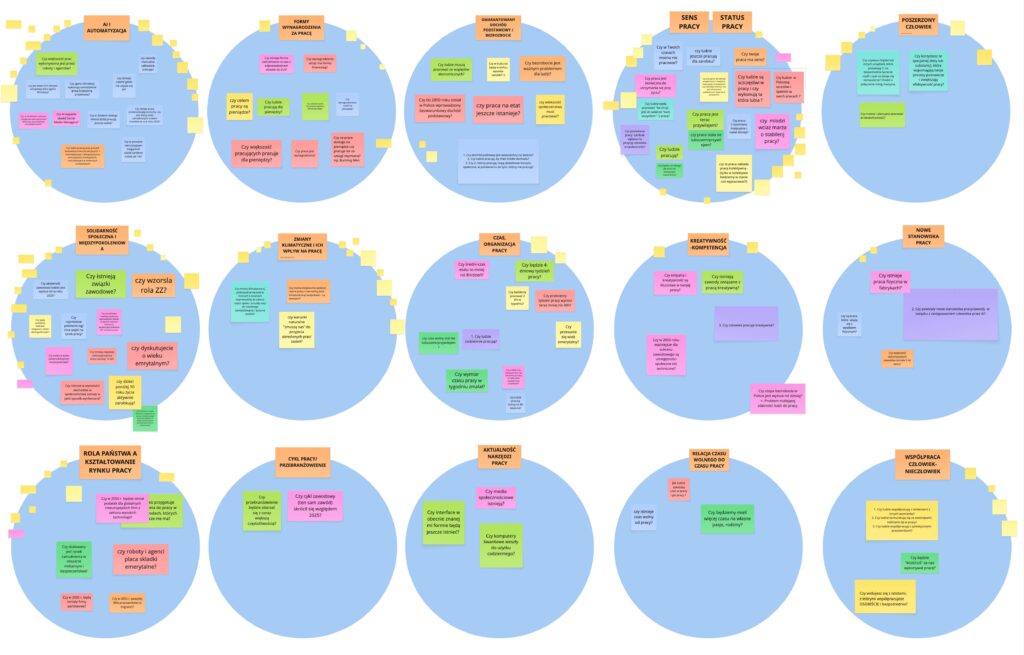
- “Rip van Winkle” exercise: participants formulate yes/no questions to a fictional person from 2050, surfacing key uncertainties and revealing hidden assumptions about the future.
- Uncertainty clustering and axis formulation – transforming raw questions into structured drivers with defined extremes.
- 2×2 scenario matrix construction: selecting independent uncertainty axes, developing internally consistent scenario logics, and creating initial “snapshot” narratives.
- Iterative scenario refinement through peer feedback rounds and desirability/probability assessment.
- Dedicated module on the Delphi method: from classical foundations through Real-Time Delphi evolution, including hypothesis formulation principles and the 4CF HalnyX® platform demonstration.
Outcome
Participants gained practical facility with core scenario planning methodology (Oxford Scenario Planning Approach principles), experience in facilitating uncertainty identification exercises, and understanding of expert elicitation through Delphi techniques. Tangible outputs included: clustered uncertainty maps, calibrated scenario axes, four exploratory scenarios for Polish labour market futures, and assessed scenario sets rated for probability and desirability – providing templates applicable to their own professional foresight practice.
Methods and Tools Applied in the Workshop
Futures Cone Joseph Voros’s model visualising the spectrum of futures – from projected (business as usual), through probable, plausible, possible, to preferable. It establishes the epistemological foundation that foresight is not about predicting a single future, but exploring multiple possible variants.
Rip van Winkle Exercise Participants formulate up to 3 closed (yes/no) questions to a fictional person from the year 2050. This technique surfaces key uncertainties and reveals hidden assumptions about the future of the topic under investigation (here: the Polish labour market).
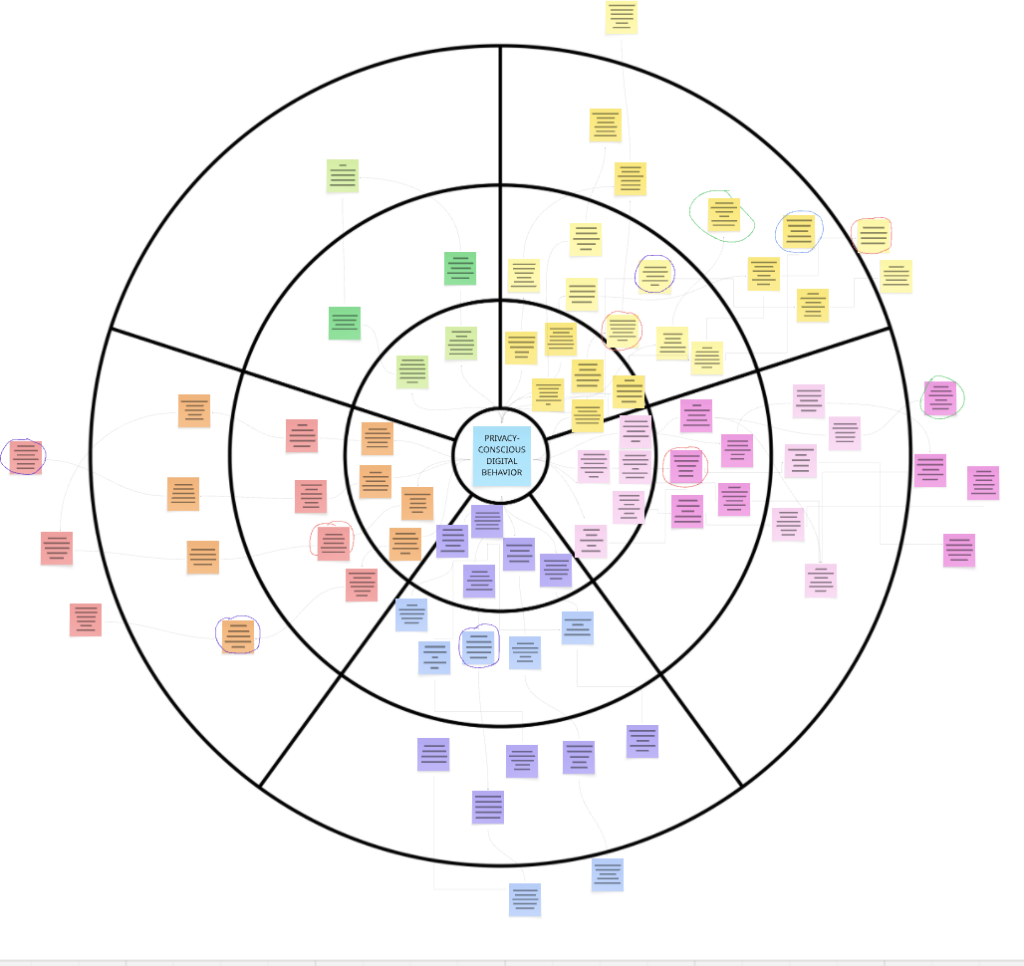
Uncertainty Clustering Grouping collected questions/uncertainties into thematic categories, then selecting those with the highest impact and greatest uncertainty regarding their direction of development.
2×2 Scenario Matrix Two independent uncertainty axes (with extreme projections at each end) create four quadrants – each defining a distinct scenario logic. A method derived from the Shell and Oxford Scenario Planning Approach traditions.
Delphi Method A structured expert elicitation technique based on anonymity and iterative feedback. The workshop covered the classical round-based version as well as Real-Time Delphi (Theodore Gordon, 2004), including a demonstration of the 4CF HalnyX® platform.
Horizon Scanning Systematic search for trends, change drivers, and weak signals in the environment – using STEEP/PESTEL frameworks for categorisation.