Aleksandra Więcka
Strategist of Organizational and Societal Change
working at the intersection of change, power, and narrative
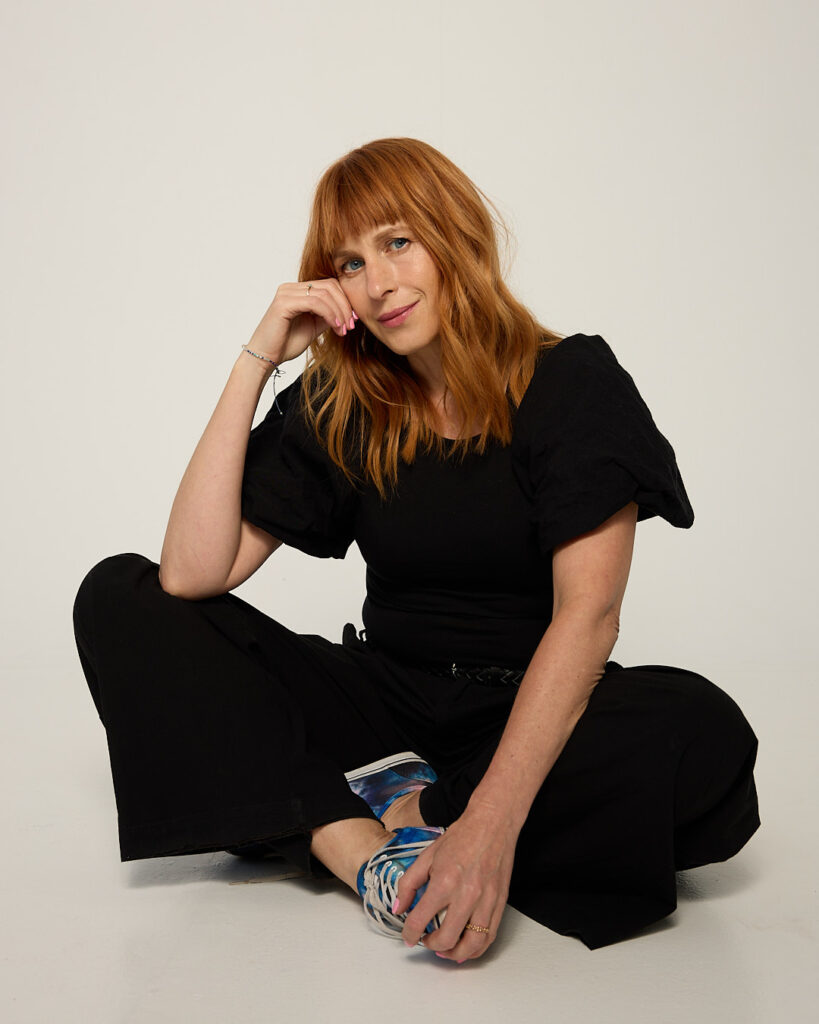
Her practice sits at the intersection of strategic foresight, narrative design, and adaptive leadership, focusing on moments when organizations, leaders, or entire social systems can no longer rely on what once worked.
She designs narratives not as communication layers, but as strategic infrastructures—tools for sense-making, alignment, and decision-making under pressure. In this approach, stories are neither decoration nor external messaging. They function as mechanisms for navigating complexity and enabling real change.
Over the past decade, Aleksandra has advised government institutions, public leaders, global corporations, and cultural organizations on strategic communication, crisis navigation, and transformation. She has worked under intense political and media pressure—supporting ministers, central government offices, and election campaigns—while also collaborating with companies such as Google, Meta, Orlen, Pfizer, Santander, and Deloitte, as well as major media groups. She specializes in situations where time is scarce, stakes are high, and coherence matters more than consensus.
Her original methodology, Story Design, combines human-centered design, storytelling, futures thinking, and systems analysis. In this framework, communication is treated as a complex intervention: researched, prototyped, tested, and iterated. Aleksandra uses narrative to surface hidden tensions, map adaptive challenges, and help leaders articulate decisions that people can genuinely stand behind.
Alongside her strategic work, Aleksandra brings a strong cultural and media background. She is the author of How to Talk About Yourself Well (Zwierciadło, 2020), a former journalist and editor (including Newsweek, Forbes, and Puls Biznesu) and a co-author of documentary and social impact projects ( ‘Matki Pingwinów, Netflix). This allows her to move fluently between public policy, business strategy, and cultural imagination—between spreadsheets and symbols.
Her current interests focus on narrative resilience, foresight under geopolitical pressure, and the role of culture in shaping long-term societal choices. She is particularly engaged with questions of European identity, democracy, technology and art—asking not only which futures are likely, but which futures we are quietly normalizing through the stories we tell today.
At Strategic Dreamers, she designs transformation processes, helping organizations develop narratives that enable change